

Fall Rainbow Lava Lamp Bottle 🎨🍂
Pour It • Fizz It • Watch Fall Colors Dance!
What if you could catch the swirling colors of autumn inside a bottle?
With a little oil, colorful water, and one fizzy tablet, you can create a bubbling fall science show that looks like tiny leaves floating up and tumbling back down!
Bug pressed her nose close to the bottle.
“Look, Babe! The leaves are having a bubble-powered dance party!”
Babe adjusted her pink glasses. “Technically, those are colored water droplets carried by carbon dioxide gas.”
Bug nodded seriously. “Exactly. A bubble-powered dance party.”
Best For
- Ages 4–7
- Science exploration
- Color play
- Quiet observation
- Fine-motor practice
- Adult-supervised family STEM time
You’ll Need
- 1 clear plastic bottle or jar
- 1 cup vegetable oil
- ½ cup water
- Red food coloring
- Orange food coloring
- Yellow food coloring
- Purple food coloring
- 1 effervescent tablet
- 4 small cups
- Spoon or craft stick
- Funnel or small measuring cup
- Tray or towel for spills
- Flashlight, optional
A Quick Color Note
Mixing all four food colors in one cup may create a dark brown or muddy purple. For prettier fall colors, divide the water among four small cups and tint each portion separately.
The colors will eventually mingle—and that is another fun transformation to observe!
Let’s Make Some Bubbling Fall Magic!
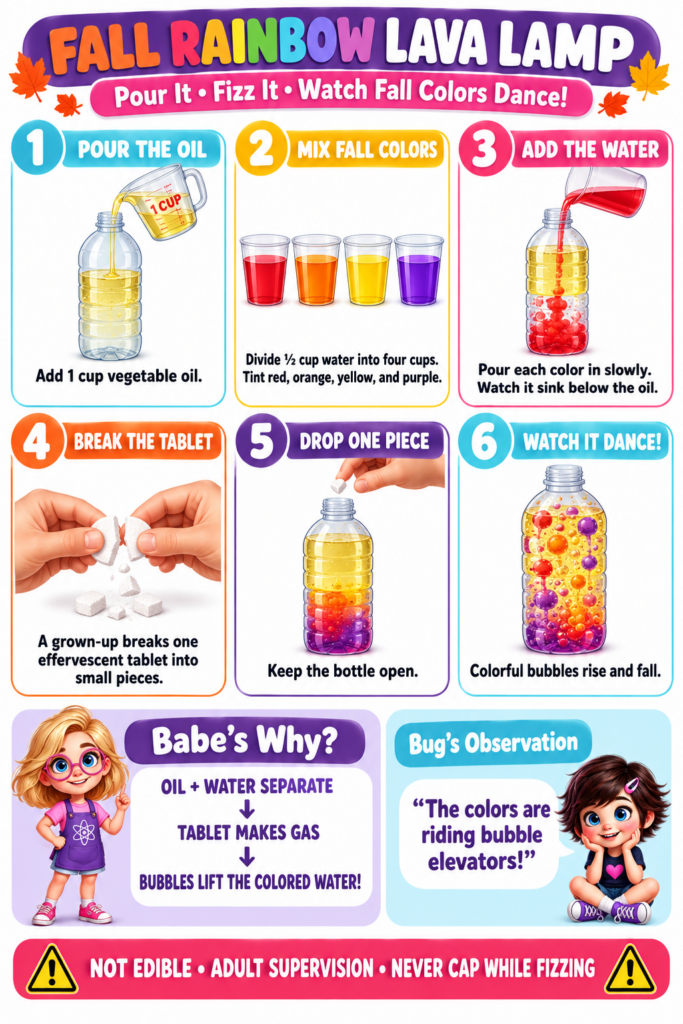
Step 1: Pour the Oil
Place the bottle on a tray or towel.
Use a funnel to pour approximately 1 cup of vegetable oil into the bottle. Leave several inches of empty space at the top so the bubbles have room to move.
“Plenty of room for dancing!” Bug announced.
Step 2: Create Your Fall Colors
Divide the ½ cup of water among four small cups.
Add one or two drops of food coloring to each cup:
- Red
- Orange
- Yellow
- Purple
Stir each color gently.
Encourage your little scientist to predict which color will be easiest to see inside the golden oil.
Step 3: Add the Colored Water
Slowly pour the colored water into the bottle, one color at a time.
Watch closely. The droplets may briefly travel through the oil before collecting beneath it.
Wait & Wonder
Pause before adding the tablet.
Ask:
- Which liquid is floating?
- Which liquid sank?
- Are the colors staying separate or beginning to mix?
- What do you predict the tablet will do?
- Will the bubbles move the oil, the water, or both?
Give the bottle a moment to settle into two clear layers.
Step 4: Prepare the Fizzy Tablet
Break the effervescent tablet into several small pieces.
A grown-up should help with this step and handle the tablet pieces.
Step 5: Start the Fall Bubble Dance
Drop one small tablet piece into the open bottle.
Watch as colorful blobs rise through the oil, pause near the top, and then drift back down like tumbling autumn leaves.
Add another piece when the bubbling begins to slow.
Keep the bottle open while the tablet is fizzing. Never tighten the cap during the reaction.
Step 6: Light It Up
For an extra-glowy observation, dim the room and have a grown-up shine a flashlight through the side or underneath the bottle.
Do not place the bottle directly on a hot light source.
Babe’s Why? 🧠
Oil and water do not mix because their molecules are attracted to different things. Water is also denser than vegetable oil, so it settles at the bottom.
The effervescent tablet reacts with the water and produces carbon dioxide gas. Tiny gas bubbles attach to blobs of colored water and carry them upward through the oil.
When the bubbles reach the top and escape, the colored water becomes heavier than the oil again—so it sinks!
The Science Story
OIL + WATER
↓
FORM SEPARATE LAYERS
↓
THE TABLET MAKES GAS BUBBLES
↓
BUBBLES LIFT COLORED WATER
↓
THE GAS ESCAPES
↓
THE WATER FALLS AGAIN
Bug Wonders… 🐞
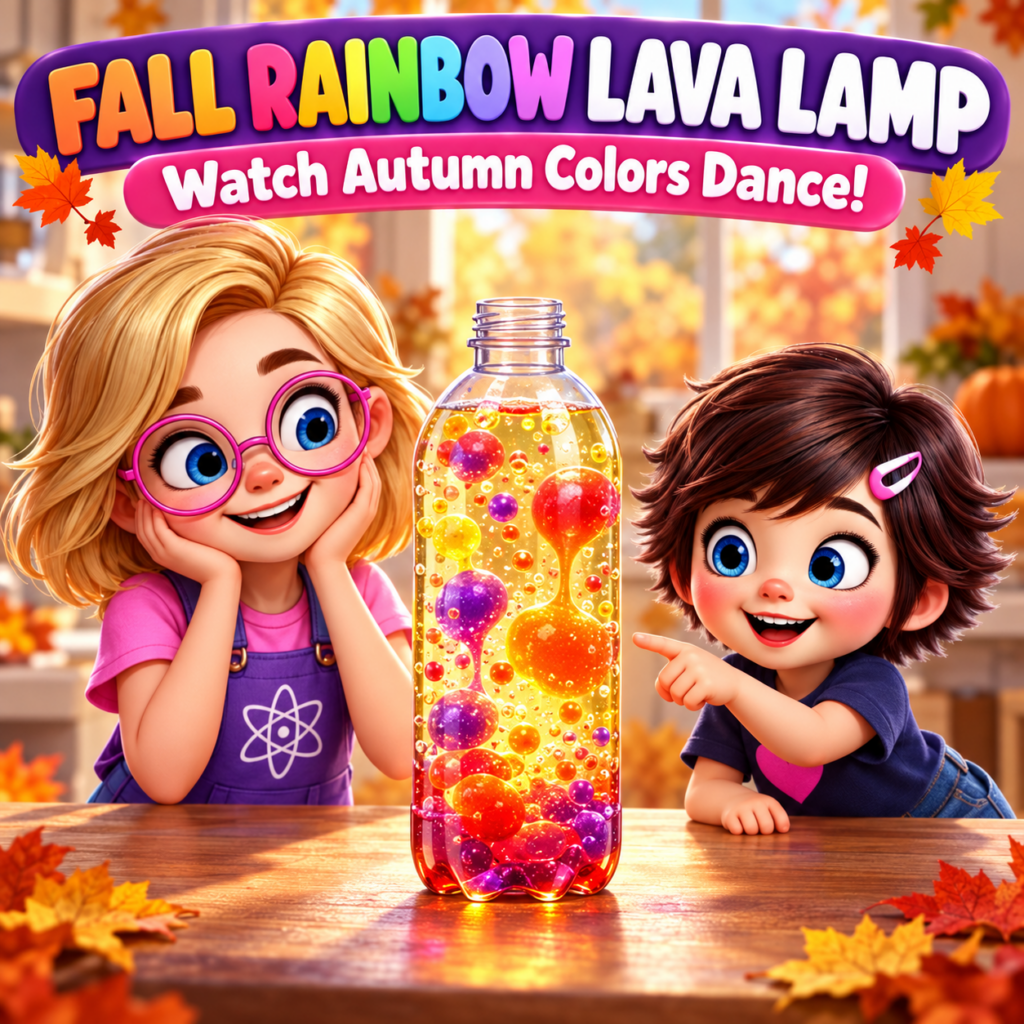
“Are the bubbles giving the colors tiny elevator rides?”
Babe smiled. “That is actually a surprisingly useful way to picture it.”
Try Another Curious Question
Experiment with observation—not extra ingredients:
- Which color is easiest to see?
- Do large and small tablet pieces fizz for the same amount of time?
- What happens when you wait for every bubble to stop?
- Does the reaction look different when viewed with a flashlight?
- How long does one tablet piece keep the colors moving?
What Kids Are Actually Learning
- Density: The denser water settles below the oil.
- Liquid properties: Oil and water remain in separate layers.
- Chemical reactions: The tablet reacts in water and releases a gas.
- Cause and effect: Gas bubbles lift the colored water.
- Prediction: Children form an idea before observing the result.
- Visual tracking: Kids follow droplets as they rise and fall.
- Fine-motor skills: Pouring, stirring, and adding drops require control.
- Patience: The experiment rewards careful watching.
Sensory-Friendly Options
- Watch the bottle before adding the tablet for a calm color-and-layer activity.
- Add only one tiny tablet piece for gentler bubbling.
- Let children observe from a comfortable distance.
- Skip the flashlight if dim lighting or bright contrasts feel uncomfortable.
- Invite children to draw what they see instead of touching the materials.
Grown-Up Note 💛
Children do not need to memorize words such as density or carbon dioxide to experience meaningful science. When they predict, pause, notice, and ask “why,” they are already thinking like scientists.
Let the wonder come first. The vocabulary can grow alongside it.
Safety First
- Adult supervision is required.
- This experiment is not edible or drinkable.
- Use a clear plastic bottle rather than glass with young children.
- Do not cap or seal the bottle while it is fizzing.
- Do not shake the bottle during the reaction.
- Keep the mixture away from mouths, eyes, pets, and younger siblings.
- Food coloring may stain clothing and surfaces.
- Wash hands after the activity.
- When completely finished and no longer fizzing, pour the liquid into household trash or follow local disposal guidance rather than pouring a large amount of oil down the sink.